

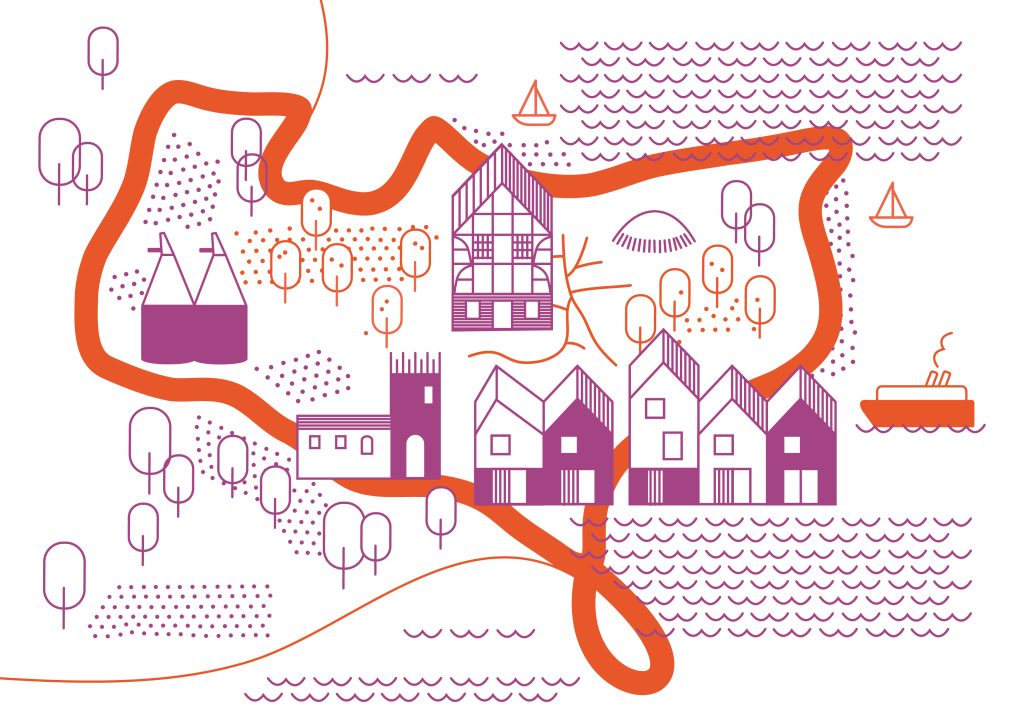
Vision
Celebrate and respond to Kent’s varied and distinctive landscapes, design characteristics, vernaculars and history. Root development in place, respecting and enhancing the local context.
Expectations
These expectations outline what good looks like. They are not in a set order of priority.
- Start with the landscape: design concepts and placemaking strategies should respond to Kent’s unique landscape features, orchards, marshes, cliffs, beaches and other coastal features, chalk streams, wooded hills and protected national landscapes.
- Create a sense of place through context-driven site layouts, landscape strategies (including native planting choices which encourage biodiversity), street design, building proportions and materials.
- Respond to local settlement patterns as well as built form, reflect the positive local vernacular within proposals, not generic or poor-quality architecture and masterplanning.
- Conserve and enhance local heritage, both visible and hidden, from fishing huts to naval infrastructure, forts and other archaeological sites, medieval lanes and post-war townscapes.
Kent’s landscapes, heritage and local character are the starting point for good design in the county. This doesn’t mean pastiche, it means contextual design, development that belongs where it is rather than looking like it could be anywhere. To understand how these expectations connect to technical guidance, explore the related pages in the sidebar.