

Vision
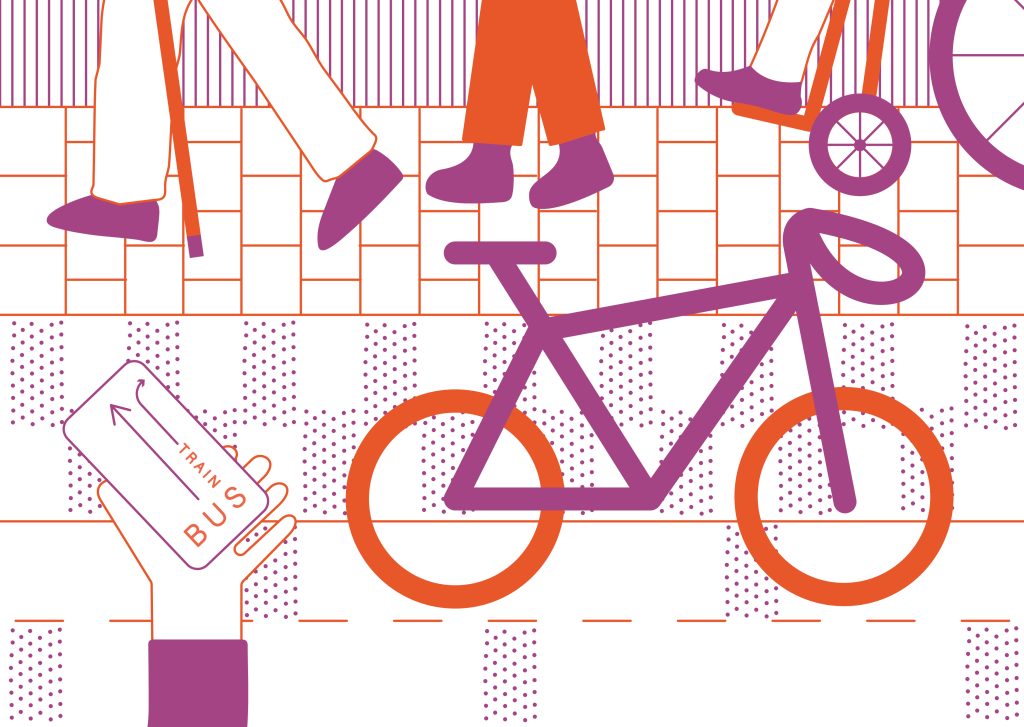
Create walkable communities and make sustainable, active travel an easier choice for all. Plan for mobility that’s clean, inclusive, and well-connected across Kent.
Expectations
These expectations outline what good looks like. They are not in a set order of priority.
- Put people first in the movement hierarchy, pedestrians, cyclists and wheeled users should be prioritised over cars.
- Connect into existing networks, link new places to existing towns and infrastructure through coordinated movement networks.
- Incorporate public transport provision within new developments and plan for future modal shifts.
- Ensure transport equity: access should work for all income levels, life stages and abilities.
- Provide direct and safe routes to schools, jobs and services without needing to own a car.
- Reduce car dominance through layout design: for example, car-free developments where appropriate, car parking to the side or rear of homes, bikes to the front, allowance for car shares and avoiding wide, car-centric streets.
Designing for active and sustainable travel is one of the most impactful ways to improve quality of life in new developments. For technical guidance on highway design, public rights of way and the pre-application process, explore the related pages in the sidebar.