Principles

What We Expect to See and Why

The Kent Design Guide is built around five core design principles. Together, they describe what good design looks like in Kent, from respecting local character to promoting health, sustainability and collaboration.

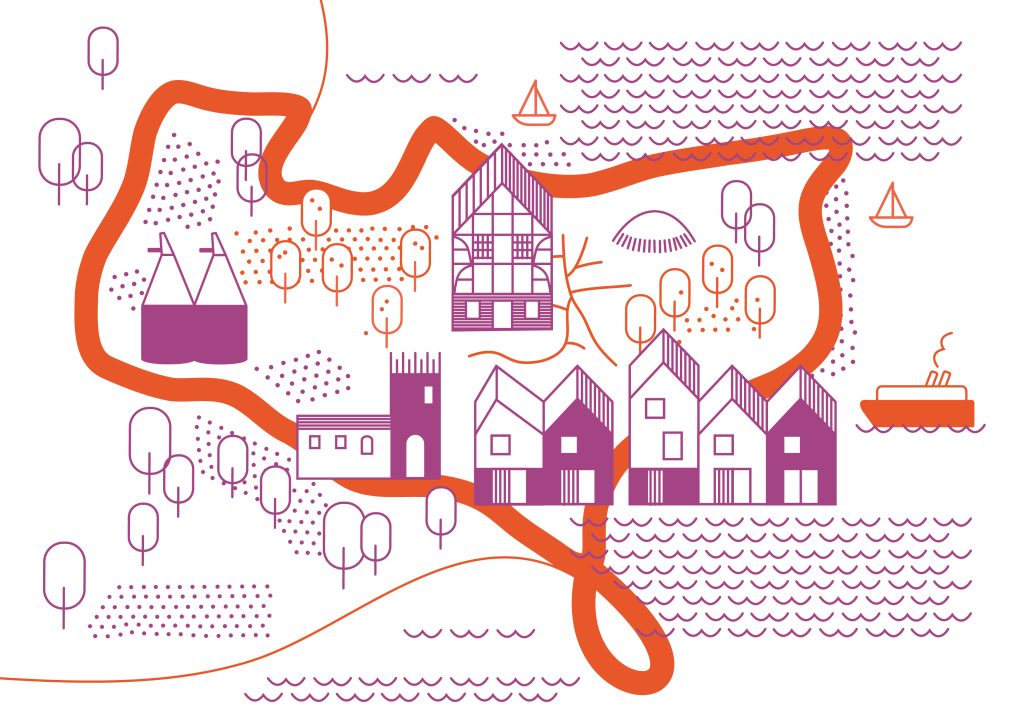
Kent is one of England’s most varied counties, from the chalk downlands and orchards of the Weald to the coastal towns, medieval street patterns and marshlands of the east. This diversity is a strength, and new development should respond to it.

We are all designing for a Kent that is more sustainable, equitable and resilient. A Kent that is rooted in its local identity, landscapes and stories, inclusive of all ages and communities, and responsive to the need for low-carbon and efficient solutions.

Five Kent-specific Sustainable Design Principles have been developed with Kent’s county and local authorities, developers, house builders, and partnership organisations, in response to detailed comments received in a series of workshops and feedback sessions. How to use the principles explains how they apply across different development types and scales. These principles are:

1. Of Kent
Principle 1

1. Of Kent

Design for Kent’s Identity — Landscape, Heritage and Character

Kent is one of England’s most varied counties. This principle asks that new development responds to the specific place — its landscape, heritage and the character that makes Kent’s towns and villages distinctive.

1. Of Kent →
2.  People-first
Principle 2

2. People-first

Support sociable, inclusive and resilient communities

Good design puts people at the centre. This principle focuses on creating places that are inclusive, safe, accessible and support strong communities.

2. People-first →
3.  Health & wellbeing
Principle 3

3. Health & wellbeing

Promote health, nature and active living

The places we build directly affect people’s physical and mental health. This principle promotes access to green space, play, clean air and environments that support active lifestyles.

3. Health & wellbeing →
4.  Active travel
Principle 4

4. Active travel

Enable connected, accessible and low-carbon mobility

New development should prioritise walking, cycling and public transport over car dependency. This principle sets expectations for connectivity, accessibility and sustainable movement.

4. Active travel →
5.  Resilient places
Principle 5

5. Resilient places

Deliver sustainable, low-carbon and climate-resilient places

Kent faces significant climate challenges. This principle covers energy efficiency, sustainable materials, flood risk management, biodiversity net gain and circular economy approaches.

5. Resilient places →