Search Icon Search Icon

We use cookies to improve user experience and analyze website traffic. By clicking “Accept”, you agree to our website’s cookie use as described in our Cookie Policy. To view our Cookie Policy in full click here.

Preferences
  • This website cannot function properly without these cookies.

  • Analytical cookies help us enhance our website by collecting information on its usage.

Orchard Gate, Ditton

OVERVIEW

From 1929 until its closure in 1991, this site was home to Ditton Laboratories, a research station developing refrigerated storage technology for the apples that are the cornerstone of Kent’s agricultural economy and reputation.

It remained redundant until the East Malling Trust ran a competition to select a development partner, won by Millwood Designer Homes.

The brownfield site has been completely transformed, with unsightly industrial units, offices and laboratory buildings replaced by a unique development of bespoke homes. Careful landscaping and local building materials create the appearance of a hamlet that sits naturally within its surroundings, and has grown organically over the past three hundred years.

CONTEXT

The development was built on a rural brownfield site. The architectural style is traditional in both materials and detailing, including plain clay tiles, hanging tiles, local stone, oak framing, weather boarding, multi-stock brickwork and softwood windows and doors. There is a range of bespoke house types and styles referencing the surrounding area and villages, from converted barns and stable buildings, to farmworkers cottages and manor houses.

Location:

Ditton, Kent

Project type:

Major residential

Completed:

2016

Architect / Designer:

BDB Design LLP (Canterbury, Kent)

Landscape Architect:

Landscape Perspectives

Developer

Millwood Designer Homes (Tonbridge, Kent)
DESIGN PRINCIPLES

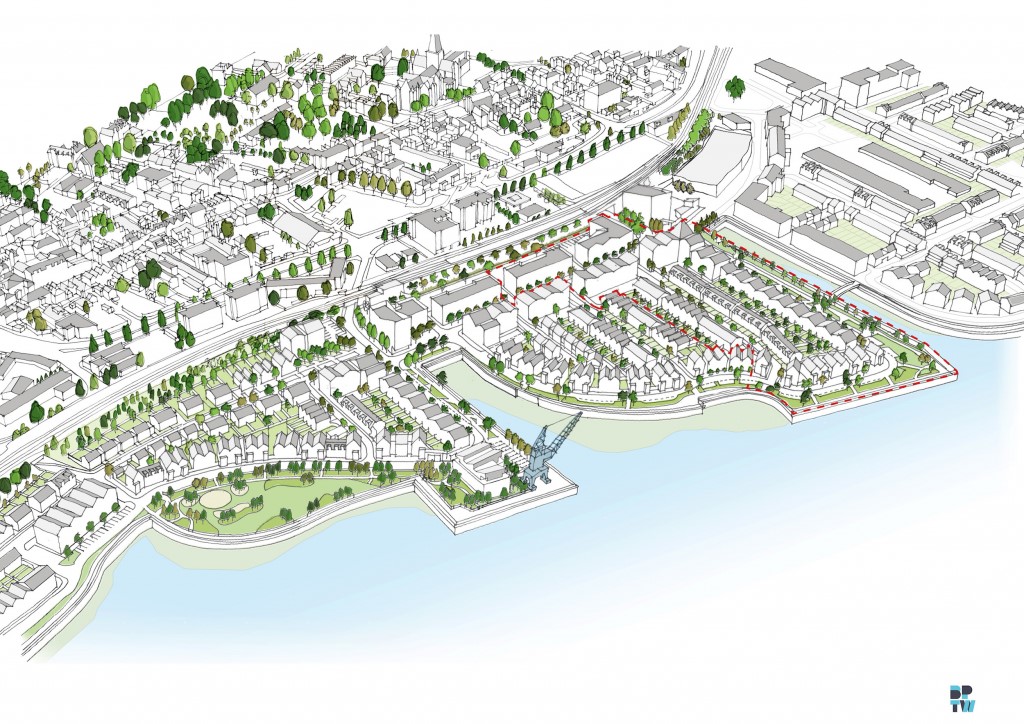
Conceived as an evolution of a small hamlet over time, the development was built in three distinct stages. The first reflected the 18th Century, with just two dwellings completed: a farmhouse and manor house, surrounded by orchards, fields and gardens, with a pond for livestock.

The second stage showed the hamlet evolving, with the addition of estate and farm workers’ cottages, a dower house and granary. The third stage introduced further workers’ dwellings of various types and sizes, together with cottages and coach houses with stabling and other farm buildings.

Each home incorporates traditional Kent design features, such as local stone and patterned brickwork, double-hung sash windows with cambered arches and brick quoins, simple doorways with cambered arch heads, gable-end buttress-style chimney stacks and catslide roofs.

Timber-frame construction reduces carbon emissions and waste in the build process and achieves high SAP ratings. Existing materials such as crushed concrete from the demolition process were used for driveways and paths. All homes at Orchard Gate offer 10% renewable energy, with some homes incorporating hot-water solar panels, woodburning stoves and water butts.

COMMUNITY INVOLVEMENT

East Malling Research and Millwood Designer Homes held preapplication meetings with local authority officers from September 2010 and met the local Parish Council in December 2010. The team ran a public exhibition at Ditton Community Centre in February 2011, giving local residents an opportunity to view and comment on the proposals ahead of the final planning submission.

PROJECT HIGHLIGHTS

  • Orchard Gate reflects and respects the rural nature of this regenerated brownfield land. All landscaping is sympathetic to the surrounding environment, with natural features and existing planting retained or replaced wherever possible
  • Reclaimed bricks and tiles complement the traditional design, giving buildings a mature appearance and helping them blend seamlessly into their surroundings, benefiting both the environment and the local community
  • Every resident at Orchard Gate has access to the communal orchard and the opportunity to take up an allotment, with practical guidance and advice assistance available through a partnership with East Malling Research
  • Two of the research pioneers who worked at the site between the wars, Franklin Kidd and Cyril West, have been recognised by having roads in Orchard Gate named after them. A permanent interpretation board at the entrance to the development explains and commemorates the site’s important agricultural legacy.

OUTCOMES

Sales for the development were extremely strong, and feedback from owners has been excellent. The proceeds of the sale of the land were reinvested by the East Malling Trust to support ongoing horticultural research at nearby East Malling Research.